
Zebrafish Facility
Welcome to our Zebrafish Facility.
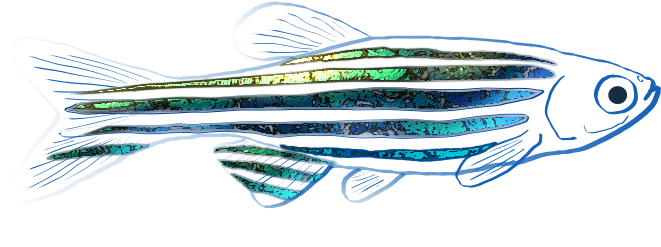
Zebrafish (Danio rerio) are small freshwater fish, typically 3 to 5 cm in length, easily recognized by their distinct blue-black horizontal stripes. As members of the Cyprinidae family—one of the largest groups of teleost fish—they are native to the freshwater ecosystems of the Indian subcontinent.
In modern biomedical research, the zebrafish is a powerful model organism due to several unique biological advantages:
- Optically Transparent Embryos: Allows for real-time microscopic observation of development and cellular processes.
- External Embryonic Development: Enables non-invasive monitoring and manipulation from the single-cell stage.
- High Genetic Conservation: Approximately 70% of human protein-coding genes—and over 80% of human disease-related genes—have a zebrafish counterpart.
- Rapid Lifecycle & High Fecundity: High reproduction rates and fast development accelerate study timelines.
To fully support the rigorous biomedical and toxicological research at our institute, we maintain the highest standards of fish husbandry and welfare. Our dedicated team performs daily health checks, monitoring behavioral changes, skin condition, breathing rates, body shape, and fin integrity. Furthermore, we maintain a strictly regulated environment, ensuring optimal water chemistry (temperature, pH, conductivity, ammonia, nitrite, copper, and heavy metals) alongside a stable 14-hour light and 10-hour dark diurnal cycle to promote optimal health and reproducible scientific outcomes.


 203a
